Photoshop Exercise

Standard

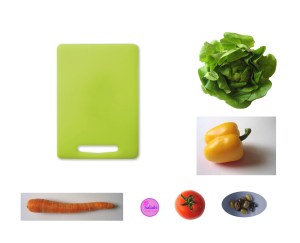
On October 8, we began working in Adobe Photoshop. We spent some time going through some basic key functions and tools. We then were given an assignment to create an advertisement. The start of the assignment was a Photoshop document that had images of salad toppings, a cutting board, and a text image.

To move the salad toppings onto the cutting board we used the object selection tool, the magnetic lasso tool, and the magic wand tool. After each object was positioned on the cutting board, we used the quick selection tool to select each object and place it on its own layer. Once each layer was created, we went to the first layer (example: carrot) and created a layer effect. We added drop shadows to each layer, so that every object on the cutting board has a soft shadow.

We then altered the image to be a flatten image, converted the colors to CMYK form, and it’s done! This was our first exercise in Photoshop, which is a practice for tools that we will need for our final Photoshop project. Coming soon!

Object Illustration Project

Standard

This semester, I am enrolled in a course called Basic Computer Images. It focuses on learning the Adobe Creative Suite: Illustrator, InDesign, and Photoshop. This was my first time really working with the Mac/Apple user face and software. I’ve used Microsoft Word on a Mac before, but never thoroughly used a Mac. So the first program that we started with is Illustrator. We went through basic functions and tools. Some of our first assignments involved using the Pen Tool and making Bézier Curves. We used worksheets as templates in Illustrator and make curves and straight lines, then combined them both to create outlines and fills of various shapes. 

Our first project was entitled Object Illustrations. The process was to first sketch out a scene or image that meant something to us. Maybe our favorite place, or instrument, or to basically illustrate something that we enjoy or take pride in. I looked to the easiest inspiration for me: music and writings. I love finding a great lyric in classic songs, or an engaging quote or poem. My all time favorite quote is from Shakespeare’s Twelfth Night. In Act 1 Scene 1, Duke Orsino starts by saying “If music be the food of love, play on;”. I find music to be influential in a person’s life, because every one finds a different meaning in the same words or notes, and its common for us to attach ourselves to songs or lyrics because they make us feel or think about something sentimental to us. Personally, any song or lyric that makes me think of my long-term boyfriend, I remember it. So this line from Shakespeare has stayed with me since high school.

From this line, I imagined a romantic scene in the woods, where there are candles and musical instruments and a bottle of wine and such. So that is the scene I sketched out and used for my image. For the assignment we were required to create multiple sketches and then incorporate them into one final image. I used tracing paper and made 2 separate layers: a tree background layer, and another that had the objects that will be on top the table. I then scanned these into the computer and placed each one on Illustrator under separate layers.
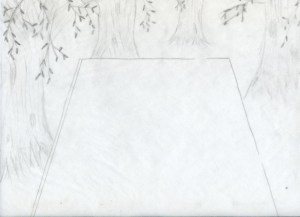
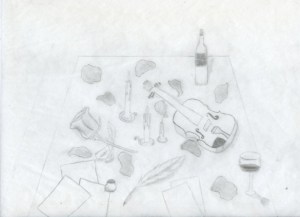
That was the easy part. The next steps included tracing each layer using the Pen Tool. That involved making shadows for the bottom of the trees, creating a dense forest look with the branches and leaves, and of course, all the objects on the table.Throughout the tracing, colors were a major step. Including finding shadow colors, and creating gradients for some objects like the wine bottle. The last piece that I worked on were the music sheets, love letters, and the ground color. I made a gradient for the ground so that it would fade to black, to the distance in the woods. Then it is finished!

Once done, we saved the Illustrator document to a EPS, which is an Encapsulated Post Script. We then opened InDesign, placed the EPS document and created a small text box to include my name on my image. From here, we created a Package of our images, which included the font we used, the links for the Illustrator document, and a PDF of the image. Final step in this 3 week long process was printing and presenting!

Overall, I was a little nervous at first, attempting to successfully create my first Adobe image. But after working consistently, I became familiar with the tools and processes in the program. I am pretty proud of my work, and very eager to begin making new images and artwork. Below is a pdf of the final image!

Money Object Illustration

Start of My Love for Communications

Standard

….My High School Yearbook!

Throughout my high school years, the club and extracurricular I have the most pride in participating in was Journalism, particularly the yearbook. I was allowed to join in my freshman year, something that rarely happened. I began helping capturing candids of the students in between classes and during lunch. I was also given my first byline, working on a timeline that began the first year my high school published a yearbook, and included other historical dates from my hometown and bits of national history.


This slideshow requires JavaScript.

The next year I was officially part of the yearbook staff, and given the position of co-Sports Editor. This position was perfect for me because I was a student athlete myself and associated with many of the coaches and athletics personnel of the school. Our duties included everything from designing the layout for the entire sports section, coordinating what to include on the pages, going to major games for action shots, and contacting each coach and team to schedule team and coach photos.

My Junior year was the most interactive and progressive year for me on the staff. I was given the position of co-editor of the yearbook. As a rule of thumb for our staff, we try to have both a senior and a junior editor-in-chief, so that there can always be a teacher and a student for not just the basic layout and planning aspects of the publication, but for the management and financial parts as well. I was included in all the discussions of costs and fees, helped coordinate the senior section, which included advertising to the upcoming seniors of where to have their senior portraits done and editing the senior section, which was reserved for the editors. It was by far the most stressful, but influential year for me in yearbook. I also helped work on the opening sections and sports section, and wrote/worked on a few more stories for our Mini Mag section, including my first spotlight article. Another reason I loved this yearbook more was it was the first time we came up with a theme and used it throughout the whole book. The theme was a Pirate’s Log, and we used terms like Admirals for the faculty and staff, named the Class section the Pirate’s Crew and gave a nautical rank title to each class.

My Senior year I moved up to senior editor-in-chief with another senior as my co-editor (I know we broke the rule.) I was most excited about the theme for this book because I thought of it from a song I was listening to one day and it brought with it all kinds of ideas for the book. The summer before my senior year I was given the chance, along with my former co-editor and our new advisor, to go to a yearbook convention of sorts in Orlando, Fl called Yearbookpalooza. There was hundreds of schools there and many professionals who gave classes and seminars the whole weekend on tips and workshops for creating the next year’s book. Each school was given the chance to sit down with a creative designer who used a special computer program to help create our cover. I took my song inspiration and gave her the idea to create a shoebox full of photographs, and the end result came out like you were looking in this shoebox and coming across your memories. This year was extra special for my high school and the staff because for the first time in FBHS history, our yearbook would be in full color! This opened so many more possibilites for photo ideas and stories and articles we could cover. We also went digital this year, going from layout paper and pica rulers, to an online website through Herff-Jones called eDesign. It was a major change for me and my staff, but we realized the benefits of working online and being able to edit multiple pages at once. I am by far the most proud of this book and the accomplishments we were able to achieve.

“Curiouser and Curiouser”

Standard
curiouser

“‘Curiouser and curiouser!’ cried Alice (she was so much surprised, that for the moment she quite forgot how to speak good English); ‘now I’m opening out like the largest telescope that ever was! Good-bye, feet!'” – Lewis Carroll


Advertising is more than just creating a eye-catching print, or special effects commercial in order to sell a product. There are more complex tasks at stake when attempting to create an effective ad. The creator of that commercial or print ad must successfully appeal to the audience’s emotions. Emotional appeal, according to behavioral psychologist John B. Watson, is the most effective way to create an advertisement. More specifically, Watson states that appealing to the three emotions of love, fear and rage will influence consumer behavior the most (Watson 2000). The use of these appeals can be found in any advertisement, from commercial products to political ads. However, I feel there’s one key human emotion/feeling that is missing in these analyses. Continue reading

Editing Isn’t All Good, All the Time

Standard
Emma Stydahar and companions at a mock fashion show  protesting Teen Vogue's model retouching.

Emma Stydahar and companions at a mock fashion show protesting Teen Vogue’s model retouching.

No one can argue that creating the perfect atmosphere, timing, lighting, movement, etc. is an easy task. Photographers, creative directors, set designers and producers all work the best they can with what naturally comes by. That includes making sure outdoor photos aren’t darkened from a cloud-covered sun, or that the wind makes a model’s scarf move just slightly, not obstructing any faces. Editors, photographers, models, art directors and more all want the perfect shot, spread, cover and publication. In the digital age, obtaining that perfection has become more than easy- but at a cost. Continue reading

People Only Care for What They Know

Standard

psychology advertising

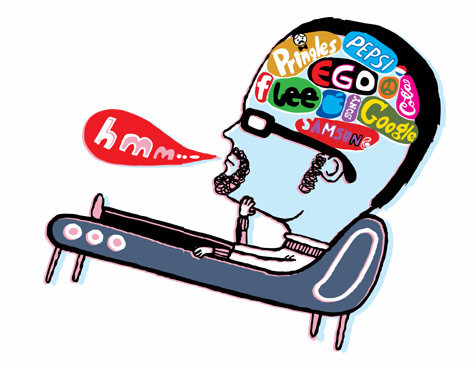
When was the last time you went to the grocery or typical drug store and decided on a particular brand for a product simply because you recognized the name? Consumers continuously go this route when shopping for different products, and psychology supports this action in a very simple way: People are more attracted (not just physically, but cognitively) to products, places, or people they are more familiar with. Continue reading

A Change in Direction

Aside

With my first semester of Communications classes under my belt, and the summer classes soon ending, I have learned so much about the journalism industry. Completing classes such as Law and Ethics in Communications, Advanced Writing for the Media, and Media Theories and Effects, I have experienced and tried my hand in many issues and styles of journalism. And that is just the beginning. The Law and Ethics course sparked my interest the most, as I played the part of a mock lawyer defending my “college newspaper” in a libel trial, which led to my final paper discussing libel laws for online uses, including the recent SOPA controversy. I became much more involved in local and national events these last few months, thanks mainly in part to my professors asking I read a newspaper every day (which I still try to do.) Another huge change in my communications career happened when I finally got off my high horse and signed up for a Twitter account. Since then, I don’t believe I have ever been more interested in news and stories, nor been slapped with so much information in one space at one time. Yes, these last two semesters have made me ever more sure of what I wish to do in my life and where I want my future to be: communications and media. Continue reading

Need a Job? Get a Twitter?

Standard

404302-get-organized-clean-up-your-social-media

As the growing popularity and usability of social media continues, it may have a positive effect on our economy. Corporations and small businesses alike are learning the advantages of embracing the technological era to earn better, well-rounded and prepared employees, as well as strengthen their grasp in society. More and more college level students are participating in these tools and building their resumes on paper, through the web, and in their every day lives. Social media embodies many useful capabilities that can help employers and job hunters all around. Continue reading

Journalists Now Carry Everything They Need – In a Backpack!

Video

Journalism was a powerful tool in the growing years of our country. It inspired thought and influenced political matters. What was just 100 or so papers and printers has progressed into a far more complex institution and idea. It is not simply a printer, editor, or writers per se. It includes photographers, graphic designers, copy editors, printers. layout designers, etc.

The last decade has introduced a technological era that has altered the approaches of journalism. There are more ways to gather information and sources for stories, advancement to the style and mechanics of print, and a broader field of information and “scoops” available.

Continue reading

What’s My Line?

Standard

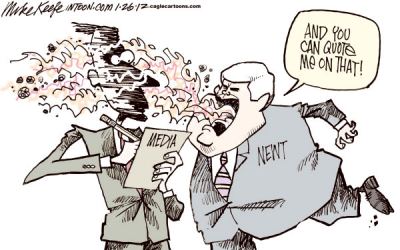
Mike Keefe, Cagle Cartoons


This campaign season has brought up numerous questions about the responsibilities, or roles, of the media. Throughout this country’s history, the media continues to play a larger and more important role. Whether its our own government attempting censorship during the revolution, or breaking boundaries in Vietnam, the media represents our society across many mediums and is a vital part of our democracy. Recently, in the last decade maybe, the appreciation of journalism has turned. Either we are too liberal, too conservative, or too intrusive in others lives. However, there shouldn’t be any doubt what our duties are as journalists and what our place in society is, if everyone follows the principles and ethics of journalism, and laws and precedent from history. Continue reading