
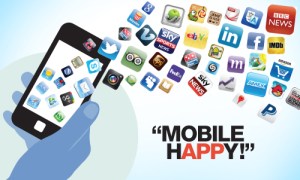
The first topic I feel I should look into is one most relevant to myself and my generation: mobile access. It is unbelievable to witness the change in technology, right in my hands. I remember back in elementary school (not to sound like my grandfather) when we learned how to right a simple research paper. My class was taken to the library, and we were shown where the reference section was. And that was it. I used the encyclopedia to figure out what my topic would be, and to research it. Time was essential, and you were required to put in so much effort if you wanted a passing paper. Now, all it takes is one simple website: Google. Thanks to the genius’ who brought us the World Wide Web, AOL, personal computers and Apple, any question or concern can simply be found using Google. The most up-to-date use of Google is on our “handy-dandy” iPhones. In one instant, we can settle a trivia debate, find a recipe for dinner, or show our friends the latest viral craze on YouTube.
Just the other night, I was with my boyfriend and another couple hanging out and chatting. My friend demonstrated throughout the night just how connected we are. At least three times during our conversations, she whipped out her iPhone to look up what we were talking about, or to find the answer to a question. We have become so incredibly dependent on our mobile devices that is has impacted our personal, social lives.
Google mobile and social media applications aren’t the only byproducts of this new age. News stations and publications have adopted the use of apps on mobile devices and tablets as well. Just on my iPhone alone, I use apps for the New York Times, The Associated Press, the Weather Channel, CNN News (only because Fox doesn’t carry an app yet), and USA Today. Each of these notify me when any large event takes place, or what the weather will be like. No longer do we have to wait for the next morning’s paper boy, or sit down for the evening news to learn about the day. The news comes to us. In May of last year, America’s heavy burden of finding the leader of the 9/11 attacks had been lifted. Our superb U.S. Navy Seals did their job, and brought back a peace of mind. I remember that night exactly: the night America found out. I was sitting at my best friend’s house watching TV. Her boyfriend and I both have iPhones, and so simultaneously we received the news that Osama Bin Laden had been captured and killed. Only after we read the one-line update on our phones did we turn on the news the learn the rest of the story.

Time Magazine, May 2011
Sadly many adults my age, and ever older, don’t take that extra step of turning on the news, or reading the paper the next day to learn more about what is going on in the world. They rely solely on the one-line quips that are handed to them. I admit, as much as I would love to keep up on the news and read a paper every morning, I don’t read on as often as I should. Some may argue that it is only my generation behaving this way, but it will be like this for many more decades as technology matures more and more. Even though the senior citizen age bracket still relies on the evening news and a paper in their hands, I will eventually be a grandmother, and who know’s what the media and gadgets will be like then. Which brings us to the question, if technology is always evolving and changing, what is the fate of broadcasting and print?
 C.K.
C.K. 